Digital disruptions: Fifty years after the quartz revolution, a new era is upon us
Advertisement
Obsessions
Digital disruptions: Fifty years afterwards the quartz revolution, a new era is upon usa
In 1969, the first quartz watches paved the fashion for digital timepieces. One-half a century later, a new kind of digital revolution is shaking upwards the globe of horology.
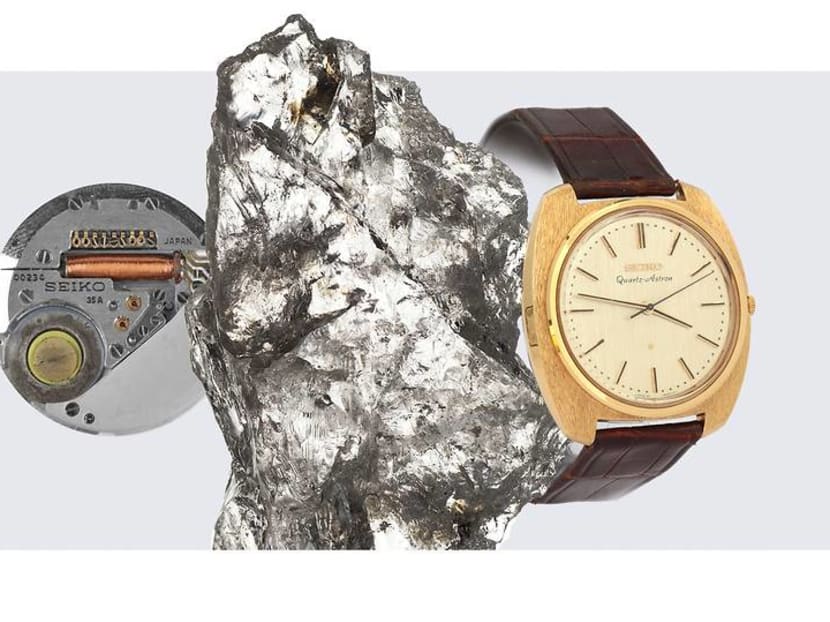
This year marks the 50th anniversary of the first quartz sentinel, the Seiko Quartz-Astron. (Photos: Seiko, Unsplash)
24 Apr 2022 06:30AM (Updated: 04 Jul 2022 04:37PM)
Applied science has a funny way of upsetting the status quo. Have reading, for instance: We used to literally burn down the midnight oil to read when information technology got dark. Then came electric lightbulbs. Today, LEDs are the norm. And with each successive invention, how nosotros consumed the written word inverse completely. This was exactly what happened to the sentinel manufacture during the quartz revolution, which began in 1969.
Fifty years on, nosotros take a look at how digital technology changed the wristwatch for consumers back then, and how the new digital revolution is impacting watch consumers today.
THE QUARTZ CRYSTAL COMETH
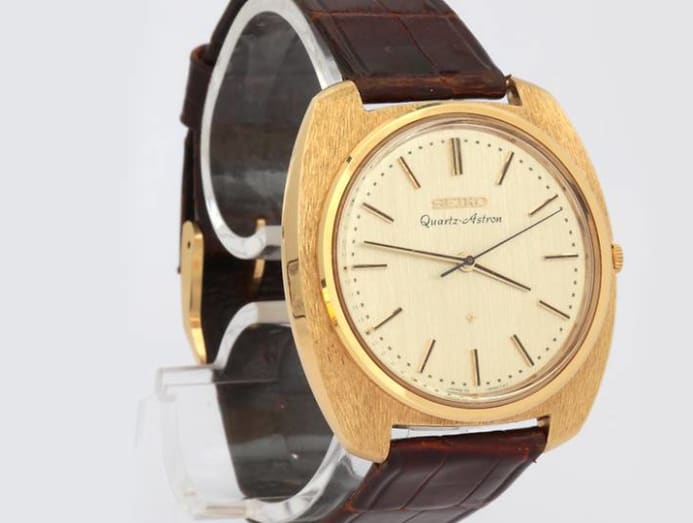
The year was 1969. On Dec 25, it was the Japanese watchmaker Seiko who brought forth the bane that was quartz upon the kingdom of mechanical watchmaking. The very outset quartz wristwatch was known as the Seiko Quartz-Astron 35SQ. Contrary to what the quartz motion would become on to become (a cheap, mass produced power source), the showtime quartz movement was priced at JPY 450,000. According to some sources, this was equivalent to the price of a medium-sized car dorsum then.
How did it evolve into the inexpensive quartz watch we know today? Throughout the 1970s, Seiko connected to develop their quartz technology, fifty-fifty doubling down on liquid crystal displays (LCD) for their watches. In 1973 they were the first to produce a six-digit LCD display, and two years later on the first to offering a multi-function digital watch which substantially created a whole new market place for highly functional watches powered by quartz movements.
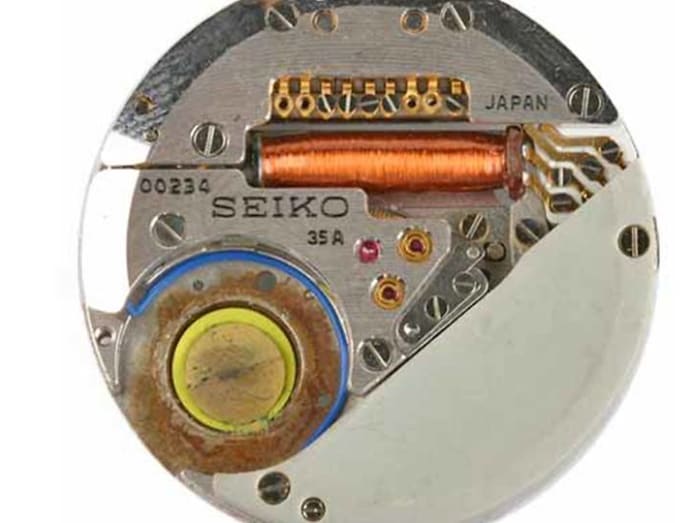
A 1985 Harvard Business organisation School written report on Seiko noted that by 1975, Seiko had invested in plants to make integrated circuits, batteries, and LCD panels. Employees were retrained to work with the new applied science. Seiko also increased its investment in robots and equipment for high-volume, automated product.
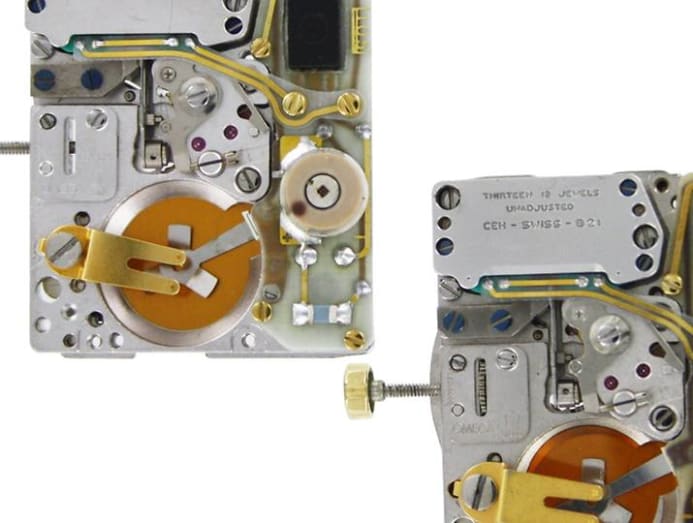
So where exactly were the Swiss in all of this? The same year Seiko launched the Astron, 20 Swiss maisons banded together to develop and unveil the Beta-21 quartz movement. Apparently, about 6,000 of these quartz movements were fabricated and used in watches similar the Omega Electroquartz, IWC'due south Da Vinci and Patek Philippe Ref. 3587. But even with this, the Swiss hesitated to embrace quartz technology. At the time, their mechanical watches dominated earth markets and the art of traditional watchmaking was regarded every bit a large component of their national identity. Thus, where the world saw a quartz revolution, the Swiss experienced a quartz crisis.
By 1983, the crisis reached a critical bespeak. The Swiss sentry manufacture, which had had 1,600 watchmakers in 1970, had declined to 600. A consortium of Swiss banks had to band together to bond out SSIH (Tissot, Omega, etc) and ASUAG (Certina, Hamilton, Longines, etc), the 2 biggest watchmaking firms in Switzerland at the fourth dimension. Information technology was then that businessman (and futurity Swatch Group founder) Nicolas G. Hayek (1928 – 2010) came upwards with the programme of merging under a property visitor called SMH (Societe de Microelectronique et d'Horlogerie).
This allowed all the brands now under SMH to consolidate movement production nether the manufacturing company ETA, which besides fell under the group'southward umbrella. Meanwhile, the brands who previously had to make their own movements, could now focus on design, marketing and sales.

The powers that exist at ETA devised an idea for a spotter blueprint that could eliminate the use of a baseplate and instead attach all the parts directly onto the caseback. This, and the fact that the entire watch would be – gasp – made of plastic and powered past a quartz movement meant that its cost could be drastically lowered. This nifty niggling plastic watch would come to be known as Swatch. The fact that information technology had a Swiss-made reputation and could compete at the depression stop of the market made the Swatch an instant success.
By the 1990s, the phenomenal popularity of the Swatch brought SMH back to profitability. So much so that in 1998, Hayek renamed SMH the Swatch Group. Ironically, when the Swatch was launched, Swiss industry pundits were certain that it would be the downfall of the Swiss lookout man manufacture. Just if not for this plastic quartz watch, who knows what the industry would expect similar today.
THE NEXT Human action BEGINS
Half a century has passed since the starting time major disruption to the watch industry and now, nosotros are at the cusp of another. With many aspects of our lives moving into the digital sphere, it would only make sense that the fashion we, as consumers, feel watches shifting into this paradigm as well.
The beginning and most obvious fashion this digital revolution has disrupted the industry is through east-commerce. Although it's been a ho-hum offset, major retailers in Singapore, such as Cortina Watch and Sincere Watch, are now jumping on the bandwagon, while globally, prices that consumers are willing to fork out to purchase a watch online take been going through the roof.
Secondly, the wealth of information on watches has expanded exponentially. Where one time you lot had to scour bookshops and libraries for a copy of that elusive book or picket magazine, at present a quick Google search volition requite you more information than you will ever need. Influential online publications like Hodinkee (which just historic its 10th anniversary) reach virtually 2 meg readers monthly.
Portals like these serve not only equally a source of data, but also build a community of lookout man enthusiasts. Through this online community of enthusiasts, such publications can then piece of work with different sentinel brands to offer unique, express edition releases from popular brands. To appointment, Hodinkee has had collaborations with Seiko, TAG Heuer, Omega, IWC and others. But perhaps the near interesting one to date is a collaboration they did with Vacheron Constantin, which saw 36 watches that cost The states$45,000 (S$61,000) each, go sold in under 30 minutes.
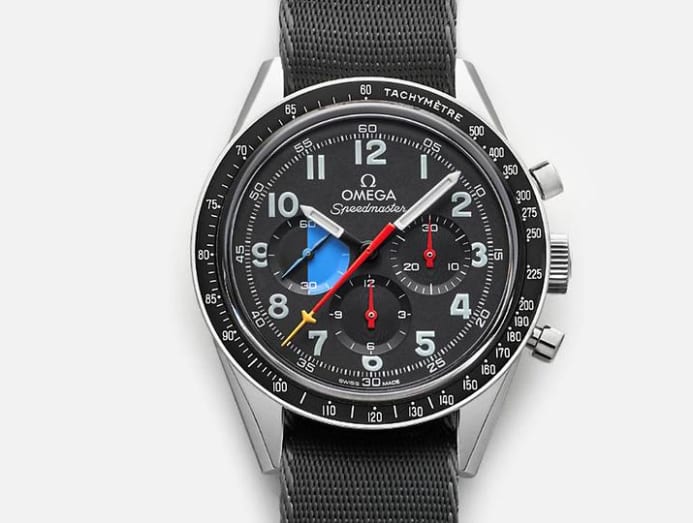
And then there'southward Instagram, which is a whole unlike beast altogether when it comes to watches. If yous follow the right accounts (@pbandwatches, @atommoore, @bexsonn etc), Instagram offers a fascinating glimpse into contemporary watch culture and collecting habits, all at your fingertips. It'south like magic.
Some Instagram accounts are both a banquet for your eyes and a bane on your bank rest. @analogshift, for case, posts brilliant images of vintage finds and gives you the ability to then read more than and fifty-fifty buy the watches if you choose. And with more large brands taking Instagram seriously (check out what Patek Philippe is doing with its account @patekphilippe), this social media platform basically becomes ane massive digital catalogue of watches.

Recent Searches
Trending Topics
Source: https://cnalifestyle.channelnewsasia.com/obsessions/fifty-years-after-the-quartz-revolution-a-new-era-is-upon-us-239526

Postar um comentário for "Digital disruptions: Fifty years after the quartz revolution, a new era is upon us"